
Best PPC advertising strategies must do more than just generate site traffic—they must deliver qualified B2B buyers directly to your sales pipeline. High ad click volume means nothing if your sales team spends half their day filtering out tire-kickers, consumer queries, and spam.
In technical sectors and specialized B2B industries, paid search campaigns rarely fail from a lack of traffic. They fail from a lack of buyer qualification. When campaigns rely on broad targeting, you end up paying premium rates for low-intent clicks. Implementing the best ppc advertising setup requires moving away from generic digital ad management toward a precision-driven, standard-based framework.
What Causes Poor B2B Lead Quality in Paid Search Campaigns?
Poor lead quality in B2B search campaigns is caused by mismatched search intent, broad keyword targeting, and ad copy that fails to filter out retail or consumer traffic. When ads lack technical qualifiers and explicit commercial parameters, unqualified users click through and drain daily ad budgets.
(Alt Text: Best PPC Advertising B2B Campaign Setup Architecture)
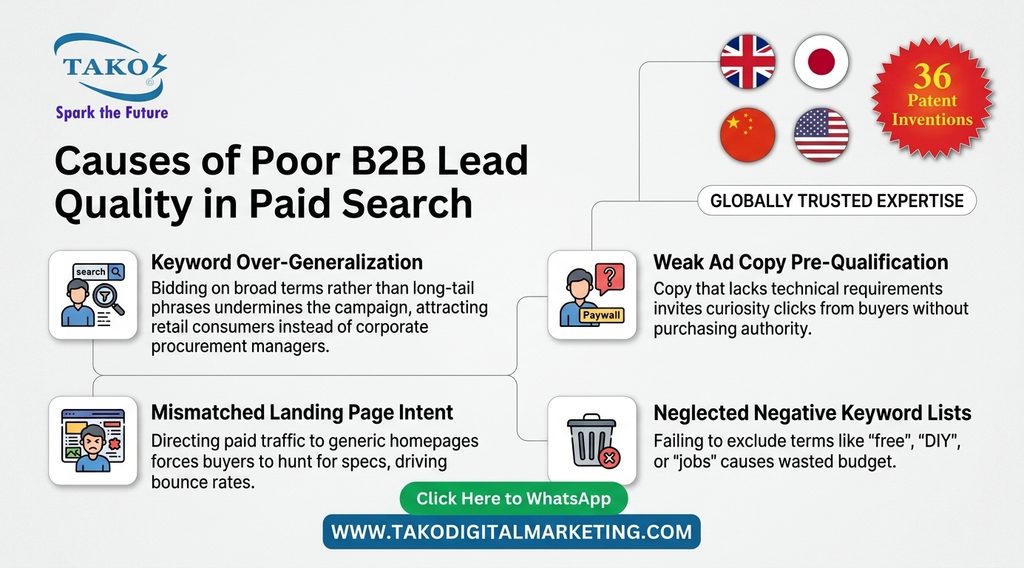
To eliminate wasted spend, search campaigns must address four primary execution gaps:
- Keyword Over-Generalization: Bidding on broad terms rather than long-tail phrases undermines even the best ppc advertising campaign, attracting retail consumers instead of corporate procurement managers.
- Weak Ad Copy Pre-Qualification: Copy that lacks technical requirements invites curiosity clicks from buyers without purchasing authority.
- Mismatched Landing Page Intent: Directing paid traffic to generic homepages forces buyers to hunt for specs, driving bounce rates.
- Neglected Negative Keyword Lists: Failing to exclude terms like free, DIY, or jobs causes even well-structured accounts to waste budget.
How Do You Build the Best PPC Advertising Architecture for B2B?
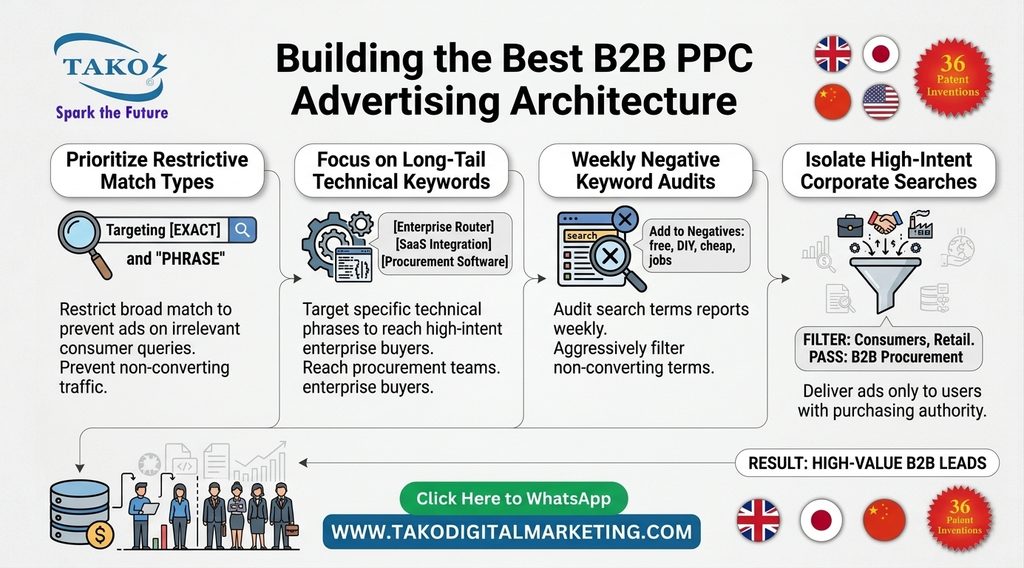
The best ppc advertising architecture for B2B relies on restrictive match types, long-tail technical keywords, and aggressive negative keyword lists to isolate high-intent procurement searches. Restricting broad match risk prevents search engine algorithms from serving ads to non-converting consumer audiences.
To ensure your campaigns target high-value B2B buyers, implement this structural framework:
- Prioritize Exact & Phrase Match: Restrict broad match keywords to prevent ads from showing on irrelevant consumer queries.
- Weekly Negative Keyword Audits: Audit search term reports weekly to add non-converting terms to negative targeting lists.
- Long-Tail Intent Focus: Targeting specific technical phrases ensures ads reach users actively searching for enterprise-grade solutions. You can review official documentation on Google Ads Keyword Match Types to structure your strategy effectively.
How Does Pre-Qualifying Ad Copy Filter Unqualified Clicks?
Pre-qualifying ad copy filters unqualified clicks by explicitly stating commercial conditions, technical standards, and order requirements directly in the headline and description. This introduces strategic friction, discouraging consumer clicks while signaling immediate credibility to enterprise procurement managers.
Executing the best ppc advertising copy requires three core tactical adjustments:
- Highlight Compliance & Standards: Displaying specific certifications (such as ISO standards or cleanroom specs) forms a cornerstone of B2B strategy for technical industries.
- Introduce Commercial Friction: Terms like B2B Supply Only, Minimum Order Quantities Apply, or Industrial Grade in ad copy filter out low-value clicks.
- Deploy Direct Calls-to-Action: Replace generic “Contact Us” buttons with triggers like “Request Technical Datasheet” or “Get an Enterprise Quote.”
How Should Landing Pages Be Structured for High B2B Lead Quality?
Landing pages for high lead quality must display immediate technical proof above the fold and utilize gated friction on submission forms. Requiring corporate email domains and explicit order parameters automatically filters out personal inquiries before they reach the sales team.
The table below outlines the core landing page components needed for the best ppc advertising conversion flow:
| Landing Page Element | Optimization Strategy | Lead Quality Impact |
| Trust Badges | Display ISO, ESD, or industry compliance certifications above the fold. | Establishes immediate technical authority for the buyer journey. |
| Form Validation | Require business email domains (@company.com) and block free webmail (@gmail.com). | Filters out personal and consumer inquiries automatically. |
| Qualification Fields | Include dropdowns for estimated order volume or specific project timelines. | Gives sales teams instant lead-scoring context. |
| Technical Documentation | Provide downloadable specification sheets and compliance reports. | Satisfies evaluation criteria, completing the conversion funnel. |
How Do You Align Conversion Tracking with Actual Revenue?
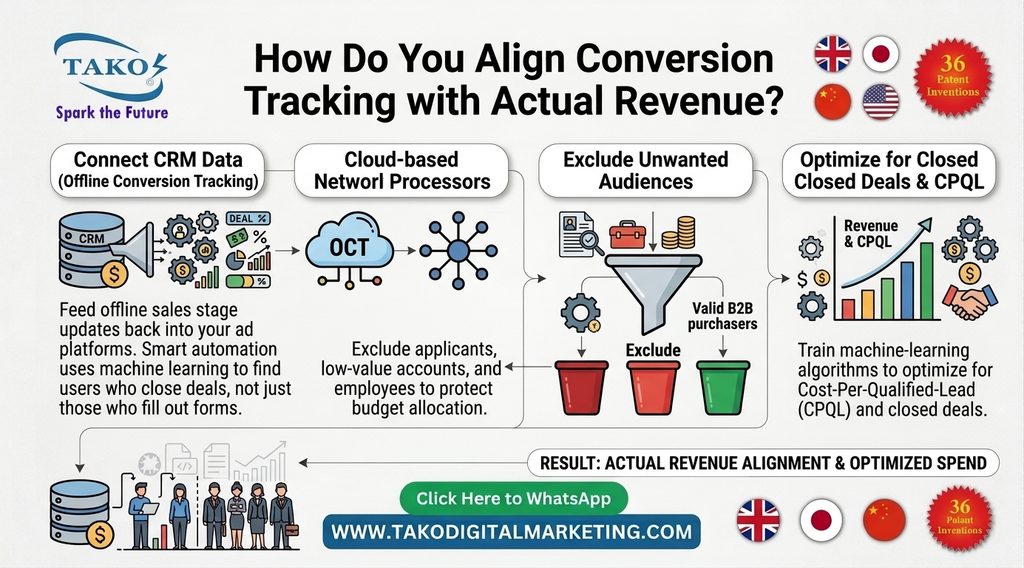
To align conversion tracking with actual revenue, feed CRM deal-stage data back into your ad network using Offline Conversion Tracking (OCT). This trains machine-learning algorithms to optimize for Cost-Per-Qualified-Lead (CPQL) and closed deals rather than top-of-funnel form submissions.
Achieving the best ppc advertising tracking setup involves two essential steps:
- Connect CRM Data (Offline Conversion Tracking): Feed offline sales stage updates back into your ad platforms. Smart automation uses machine learning to find users who close deals, not just those who fill out forms.
- Exclude Unwanted Audiences: Retargeting lists should actively exclude job applicants, existing low-value accounts, and internal employees to protect budget allocation. Learn more about configuring these parameters on our B2B Industrial Solutions Pillar Page.
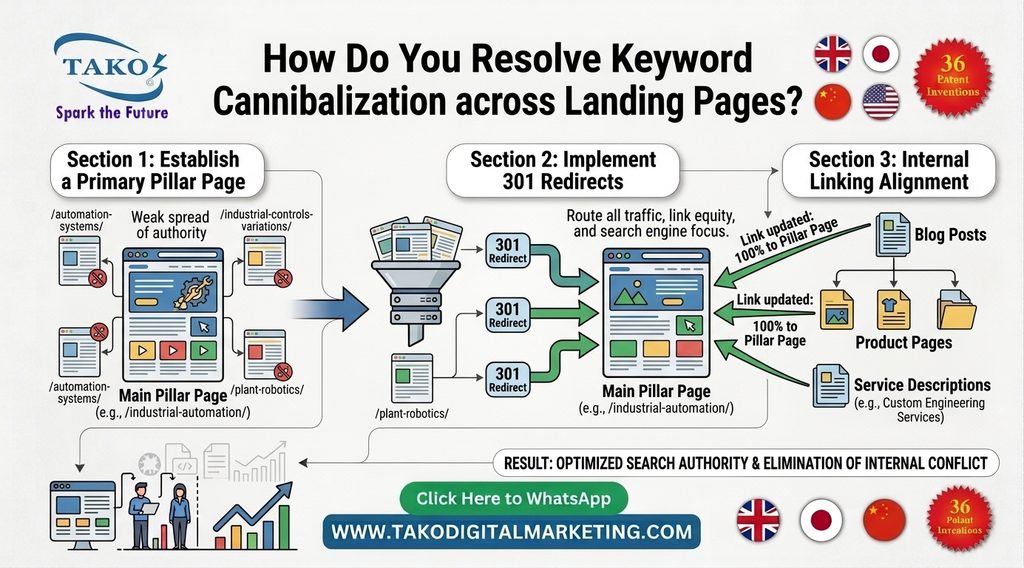
How Do You Resolve Keyword Cannibalization across Landing Pages?
Keyword cannibalization is resolved by mapping related keyword variations to a single primary pillar page and establishing 301 redirects from duplicate, weaker pages. Consolidating competing URLs prevents your own pages from bidding against each other in search engine results.
To streamline search authority and prevent internal ranking conflicts, follow this consolidation strategy:
- Establish a Primary Pillar Page: Select one comprehensive URL to target the overarching topic rather than spreading authority across weak variations.
- Implement 301 Redirects: Pass link equity and signal canonical strength by setting up 301 redirects from duplicate or thin pages to your pillar content.
- Internal Linking Alignment: Update internal links across your domain—such as visiting our Custom Engineering Services—to point directly to consolidated pillar pages.
Frequently Asked Questions
Q1: Why do campaigns run with the best ppc advertising keywords still yield zero qualified sales leads?
This usually happens when keywords are too broad or ad copy lacks pre-qualifying language. Even with a strong strategy, if your copy doesn’t state B2B parameters or specific technical standards, unqualified searchers will click your ads and exhaust your daily budget.
Q2: How does adding friction to landing pages support high lead quality?
While reducing form fields increases raw lead volume, the best ppc advertising strategy prioritizes lead quality. Adding required fields—such as corporate email domain validation—ensures that only serious buyers spend time filling out forms, saving your sales team valuable time.
Q3: How do you measure success in B2B search campaigns?
Success in the best ppc advertising execution is measured by Cost-Per-Qualified-Lead (CPQL) and closed-won revenue, rather than raw Cost-Per-Lead (CPL) or click volume. Evaluating performance against bottom-line metrics ensures your ad spend drives true ROI.